
As a business owner, you spend a lot of time thinking about growth. You want to attract new clients, expand your reach, and increase your revenue. But you may not realize that when it comes to growth, the financial decisions you make for your employees are just as important as sales and marketing.
Your employees’ retirement plans and benefits are likely one of the last things you’d think of as impacting the growth of your business. However, the way you design these programs affects your bottom line and your ability to recruit and retain the right people.
These plans have a much bigger impact than you might think. Getting it right is crucial: you want to find the perfect balance between your employee benefits and your business’s needs. Corporate retirement services for business owners by trusted advisors can help you create a tailored plan that balances employee benefits with your long-term business goals.
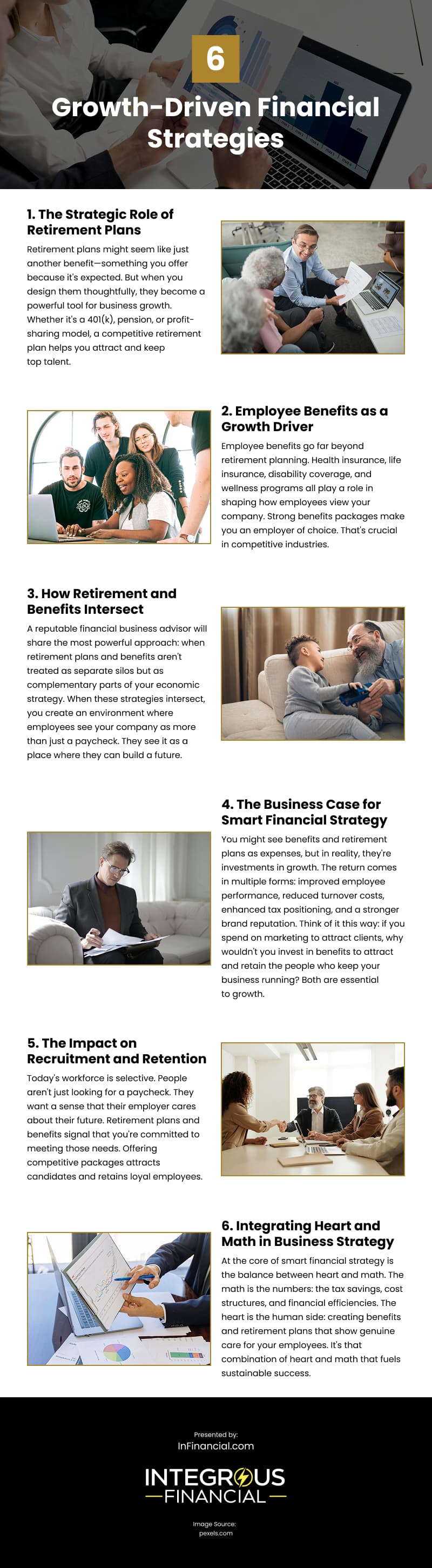
The Strategic Role of Retirement Plans
Retirement plans might seem like just another benefit—something you offer because it’s expected. But when you design them thoughtfully, they become a powerful tool for business growth.
Whether it’s a 401(k), pension, or profit-sharing model, a competitive retirement plan helps you attract and keep top talent. When employees know you’re investing in their future, they’re more likely to invest their time and loyalty in your company. A well-structured plan also reduces turnover, which cuts costs associated with constant hiring and training.
From your perspective, retirement plans can also provide tax advantages. Employer contributions are usually tax-deductible, and offering retirement benefits can improve your overall business structure in ways that reduce taxable income. By integrating retirement planning into your financial strategy, you gain a recruiting edge and economic efficiencies that support long-term growth.
Employee Benefits as a Growth Driver
Employee benefits go far beyond retirement planning. Health insurance, life insurance, disability coverage, and wellness programs all play a role in shaping how employees view your company. Strong benefits packages make you an employer of choice. That’s crucial in competitive industries.
Productivity improves when your team feels cared for. Employees who aren’t worried about healthcare costs or financial insecurity can focus on their work. This leads to better performance and a culture of sustainable growth.
You can also strategically structure benefits to balance costs with value. Consulting the right family office services for business owners allows you to design plans that fit your budget while maximizing employee satisfaction. That balance directly contributes to growth by controlling expenses and driving retention.
How Retirement and Benefits Intersect
A reputable financial business advisor will share the most powerful approach: when retirement plans and benefits aren’t treated as separate silos but as complementary parts of your economic strategy.
For example, pairing a strong retirement program with healthcare benefits gives employees a sense of both short-term and long-term security. This reduces their stress and enhances your reputation as a business that genuinely cares.
When these strategies intersect, you create an environment where employees see your company as more than just a paycheck. They see it as a place where they can build a future. That shift in perspective boosts retention and inspires employees to contribute more to your company’s growth because they feel invested in its success.
The Business Case for Smart Financial Strategy
You might see benefits and retirement plans as expenses, but in reality, they’re investments in growth. The return comes in multiple forms: improved employee performance, reduced turnover costs, enhanced tax positioning, and a stronger brand reputation.
Think of it this way: if you spend on marketing to attract clients, why wouldn’t you invest in benefits to attract and retain the people who keep your business running? Both are essential to growth. The key is to design these programs strategically so they align with your business goals rather than simply checking boxes.
This is where a full-service financial firm can make a difference. Instead of piecing together retirement and benefit programs from different providers, a unified approach ensures that every aspect of your financial strategy supports the others. That integration makes your money work harder and your benefits deliver more impact.
The Impact on Recruitment and Retention
Today’s workforce is selective. People aren’t just looking for a paycheck. They want a sense that their employer cares about their future. Retirement plans and benefits signal that you’re committed to meeting those needs.
Offering competitive packages attracts candidates and retains loyal employees. When they stay, you avoid the high costs of turnover, which include not only recruiting and training but also lost productivity and institutional knowledge. A stable, experienced workforce allows you to focus resources on expansion rather than constant replacement.
Integrating Heart and Math in Business Strategy
At the core of smart financial strategy is the balance between heart and math. The math is the numbers: the tax savings, cost structures, and financial efficiencies. The heart is the human side: creating benefits and retirement plans that show genuine care for your employees.
When you integrate both, you move beyond simple compliance and into strategy. You’re no longer just offering benefits to meet minimum standards, but using them as tools to build loyalty and long-term growth. It’s that combination of heart and math that fuels sustainable success.
Video
Infographic
Your company’s retirement and employee benefits programs do more than support your team—they drive long-term growth and stability. When designed strategically, they help attract and retain top talent while reinforcing your financial foundation. Explore this infographic to uncover six growth-driven financial strategies.